
Power Generation Noise Control: Engineering Solutions for Reliable Performance
Reliable power generation is essential to modern infrastructure, from standby generators and industrial energy systems to gas engines and Combined Heat and Power (CHP) plants. However, engine combustion, exhaust discharge, ventilation airflow and mechanical vibration can create significant noise, affecting nearby workplaces, neighbouring properties and compliance with site noise requirements.
Effective power generation noise control requires more than selecting an acoustic product. It involves understanding how noise is generated and transmitted, while ensuring that ventilation, cooling, exhaust flow and maintenance requirements are not compromised.
At IAC Acoustics Australia, we provide tailored acoustic solutions that help manage noise while supporting the operational requirements of power generation equipment.

Understanding the Sources of Power Generation Noise
Power generation installations have several potential noise sources, including engine combustion, mechanical components, exhaust discharge and ventilation systems.
Noise can escape through enclosure walls, ventilation openings, exhaust outlets, access doors and service penetrations. An acoustic enclosure alone may not provide sufficient noise reduction if ventilation openings or exhaust systems remain untreated.
An effective strategy considers the entire installation, identifying the dominant noise sources and transmission paths so that individual noise control measures work together.
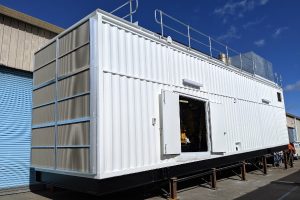
Acoustic Enclosures for Gas and Diesel Engines
Acoustic enclosures help reduce airborne noise from gas and diesel engines while accommodating the practical requirements of the installation.
Their performance depends on more than the materials used. Construction, access points, ventilation openings and connections with surrounding equipment all influence the overall result.
Key design considerations include:
– Acoustic performance: Achieving the required noise reduction for the site and application.
– Ventilation and cooling: Maintaining sufficient airflow for combustion and engine cooling.
– Thermal management: Accounting for heat generated during operation.
– Maintenance access: Allowing practical inspection, servicing and equipment replacement.
– Site constraints: Addressing available space, equipment layout and nearby noise-sensitive areas.
Considering these factors early helps avoid design compromises and costly modifications after installation.
Ventilation and Exhaust Silencers
Ventilation and exhaust systems require particular attention because they must control noise without restricting essential airflow or exhaust flow.
Ventilation silencers reduce noise travelling through air intake, supply and discharge openings. Their design must balance acoustic attenuation with airflow capacity and pressure drop to maintain effective cooling and ventilation.
Exhaust silencers reduce engine exhaust noise and must suit the engine’s exhaust flow, operating temperatures and allowable backpressure. Excessive exhaust resistance can adversely affect engine performance.
Integrating silencers with enclosures, ductwork and associated equipment helps address noise transmission while maintaining the operating conditions the system requires.
Exhaust Treatment and Thermal Management
Some power generation installations also require exhaust emissions treatment and thermal insulation, which must be coordinated with the acoustic design.
Exhaust emissions treatment
Exhaust purifiers can support emissions control when correctly specified for the engine, operating conditions and applicable requirements. Unlike exhaust silencers, which reduce noise, purifiers address pollutants in the exhaust stream. Where both are required, their integration must account for temperature, flow resistance and equipment compatibility.
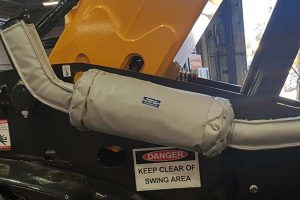
Thermal management
Thermowrap insulation systems can help manage heat transfer around suitable exhaust components. Material selection and installation must reflect operating temperatures and the requirements of the application.
Considering silencing, emissions treatment and thermal management together helps ensure that these systems function effectively as part of the wider installation.
Acoustic Considerations for Combined Heat and Power
Combined Heat and Power (CHP), also known as cogeneration, generates electricity onsite while recovering useful heat for other processes or building services.
From an acoustic perspective, CHP systems present many of the same challenges as other engine-based installations. Engine noise, exhaust discharge, ventilation and cooling equipment must all be considered, alongside the additional layout and thermal requirements of heat recovery systems.
The appropriate solution depends on the equipment, installation environment and project-specific noise targets. Coordinating acoustic measures with the wider system design helps maintain both noise control and operational performance.
Designing Noise Control Around Operational Requirements
Acoustic solutions must work in practice, not simply deliver noise reduction in isolation. Restricted airflow, excessive exhaust backpressure, inadequate maintenance access or poor thermal management can compromise equipment performance.
For new installations, addressing these requirements during the design stage helps identify potential issues before equipment is installed. For existing facilities, understanding the main noise sources and transmission paths helps determine where improvements are likely to be most effective.
Important considerations include equipment specifications, site noise criteria, nearby sensitive receptors, ventilation and exhaust requirements, operating temperatures, maintenance access and applicable regulations.
Early coordination between project engineers, equipment suppliers and acoustic specialists helps align these requirements and reduce the risk of costly changes later.
Tailored Power Generation Solutions from IAC Acoustics Australia
Every power generation project has its own acoustic, mechanical and environmental requirements. IAC Acoustics Australia Pty Ltd provides tailored solutions for gas and diesel engine applications, including:
– Acoustic enclosures for power generation equipment.
– Ventilation and exhaust silencers.
– Exhaust purifiers and associated ducting.
– Thermowrap insulation systems.
Our approach considers the equipment, site conditions and operating requirements together, helping clients identify appropriate noise control measures without overlooking the practical demands of power generation.
Planning a new installation or looking to improve the acoustic performance of existing equipment?
Contact IAC Acoustics Australia to discuss your project and noise control requirements.