
The Extremes of Sound – From Earth’s Loudest Roar to Engineered Silence (and Why Acoustic Control Matters)
Sound surrounds us in ways we don’t always notice, from the deafening boom of natural forces to the controlled silence required for precision testing and research.
In this article, we explore some of the most remarkable sound records on the planet and connect them to what acoustic engineers think about every day: how to control and manage sound effectively in built environments.
Whether it’s isolating noise from sensitive spaces or designing high-performance acoustic testing facilities, understanding the extremes of sound helps engineers create spaces that are safe, comfortable and fit for purpose.
For industries such as automotive engineering, research laboratories and advanced manufacturing, precise acoustic control is essential for accurate measurement, product development and regulatory compliance.

1. The Loudest Natural Sound in History: Krakatoa (1883)
The loudest noise ever documented was produced by the catastrophic eruption of the Krakatoa volcano in 1883 in Indonesia. The explosion was heard thousands of miles away and generated shockwaves that circled the globe multiple times.
Although direct decibel measurements weren’t available at the time, modern estimates suggest sound pressure levels far beyond anything produced by human activity, illustrating nature’s extraordinary acoustic energy.
Events like this remind us how powerful sound can be, and why controlling sound levels in engineered environments is critical for safety, performance and comfort.
In modern buildings and industrial environments, acoustic engineers apply noise control principles to manage sound transmission, vibration and reverberation.
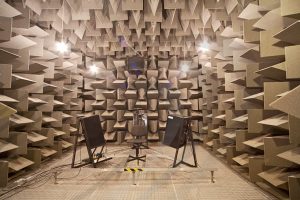
2. Engineering Silence: Precision Acoustic Test Environments
While nature produces extreme noise, modern engineering can achieve the opposite: highly controlled environments where sound is measured with exceptional precision.
In many industries, accurate acoustic testing requires spaces that isolate external noise and eliminate internal reflections. These facilities are typically constructed as room-within-room acoustic structures, using specialised absorptive materials and carefully engineered components to ensure repeatable, standards-compliant measurements.
Designing and building these environments requires a high level of acoustic expertise. To meet international standards such as ISO acoustic measurement standards, every element of the space, from structural isolation to acoustic doors, ventilation silencers and wall construction, must be precisely engineered.
These controlled acoustic environments are essential for:
1. Automotive NVH (Noise, Vibration and Harshness) testing
2. Product acoustic performance testing
3. Research and development laboratories
4. Electronics and appliance noise testing
5. Scientific acoustic measurement and experimentation
At IAC Acoustics Australia, we specialise in the design and construction of advanced acoustic testing facilities, including anechoic chambers and hemi-anechoic chambers used for precision acoustic measurement and product testing across automotive, research and industrial sectors.
These purpose-built acoustic laboratories allow engineers to measure sound power levels, noise emissions and vibration behaviour with extremely high accuracy.

3. Human and Musical Loudness Records
While nature holds the record for the loudest sounds, humans have also pushed sound output to impressive levels.
Live music events can easily exceed 120 to 130 dB, and some performances have recorded sound pressure levels above 137 dB near the stage, comparable to standing close to a jet engine.
Other high-output human-made sounds, such as pipe organs, stadium crowds and industrial machinery, demonstrate how dramatically sound levels can vary across everyday environments.
Understanding these high decibel levels helps acoustic specialists determine acceptable sound limits in spaces like live venues, studios and public event areas.
This knowledge is also applied in architectural acoustics and noise control engineering when designing spaces that must balance sound containment, comfort and safety.
4. The Science Behind Acoustic Testing Chambers
Acoustic testing chambers represent some of the most sophisticated environments in sound engineering. To achieve reliable results, these spaces must eliminate unwanted sound reflections and isolate the interior from external noise sources.
This is achieved through a combination of:
– room-within-room structural isolation
– high-performance acoustic absorption systems
– precision acoustic doors and seals
– silenced ventilation systems
– vibration-isolated structures
When designed correctly, these environments allow engineers to measure sound emissions, product performance and acoustic behaviour with a level of accuracy that would be impossible in conventional spaces.
For industries such as automotive engineering, electronics development, defence and scientific research, this level of acoustic control is essential for product development and regulatory compliance.
These specialised facilities form the backbone of modern acoustic testing laboratories around the world.

5. Why Controlling Sound Matters in Everyday Built Environments
The extremes of sound, from explosive natural events to highly controlled testing chambers, highlight how important acoustic design is in the built environment.
Well-engineered acoustics help create safer, more comfortable and more functional spaces:
1. Hospitals and clinics require controlled sound for patient comfort and clear communication
2. Broadcast studios depend on acoustic isolation to produce high-quality recordings
3. Data centres and industrial plants benefit from noise containment for worker safety and compliance
4. Theatres and performance venues rely on carefully designed acoustics to enhance the audience experience
In many of these environments, high-performance acoustic doors and doorsets and sound-isolating doors play a critical role in maintaining sound isolation and ensuring predictable acoustic performance.
So What Does This Mean for Your Project?
Whether you’re designing a quiet space for precision testing, isolating noise in a busy commercial environment or ensuring acoustic control in critical infrastructure, understanding the extremes of sound highlights the importance of thoughtful acoustic design.
Acoustic doorsets such as Noise-Lock® and Super Noise-Lock® solutions are engineered with guaranteed performance in mind. They help control sound transmission and protect people, equipment and processes, whether you are keeping sound out, keeping it in or managing it for safety, comfort and compliance.
From advanced acoustic testing facilities to industrial noise control solutions, the right acoustic design and noise control engineering ensures environments perform exactly as intended.